Quick Wins and Long-Term Digital Assets: Ola Electric’s Dual Approach to Transformation
#SmartManufacturing #OlaElectric #Digitalization #EVManufacturing #ManufacturingEngineering #Industry40“Long-term success depends on digitalizing data and creating strong digital assets. With factory data in hand, we can quickly validate design changes, integrate with product teams, and stay ahead of the competition.” - Saravanan Sakthivel, Head of Manufacturing Engineering, Ola Electric
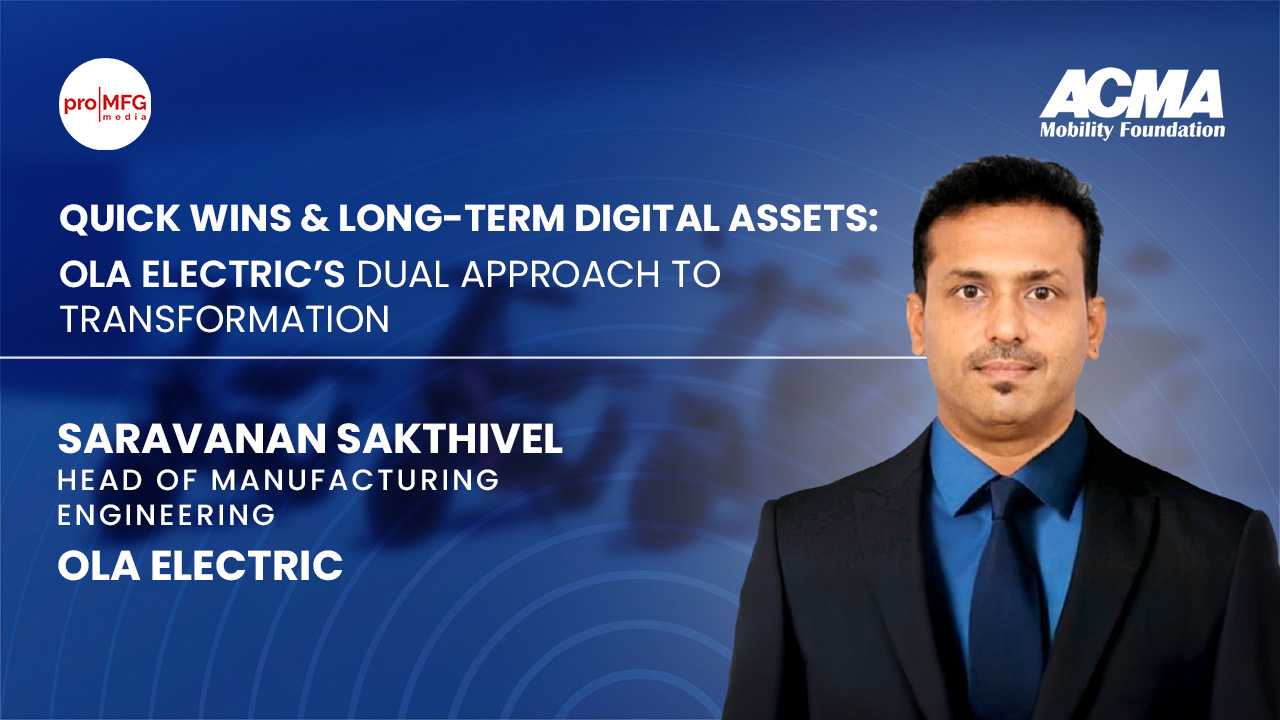
November 2025 : For manufacturers grappling with the breakneck pace of technological change, success depends on balancing short-term agility with long-term digital capability building. Mr. Saravanan Sakthivel, Head of Manufacturing Engineering, Ola Electric, outlined how the company is pursuing this dual-track approach to drive its smart manufacturing agenda.
Speaking on how Ola Electric is adapting to rapid advancements in technology, Mr. Saravanan emphasized the importance of identifying short-term “quick wins” that deliver tangible impact while laying the foundation for broader transformation. “In the short term, we need to plan for quick wins , whether it’s deploying sensors or implementing IoT solutions to validate benefits early,” he explained. These pilot-scale interventions enable faster learning cycles and build organizational confidence in new technologies.
In the long term, Ola Electric’s focus is on deep digitalization of data and strategic investment in talent and tools. Mr. Saravanan stressed that digitalization is no longer optional: “If you want to stay competitive, you need to digitalize data and ensure you’re keeping up to speed.” The ability to make quick, informed decisions based on accurate digital factory data is becoming a critical competitive differentiator.
He illustrated this with a practical example from product development. By maintaining comprehensive digital assets of factory data, Ola Electric can rapidly assess the manufacturability of new product designs. “If I have the data of the factory, I can quickly validate whether the product can be processed through,” he said. “I can create hard points and give it to the product design team, so they can design the product without changing the facility.” This integration between manufacturing and product design not only accelerates innovation cycles but also reduces costly rework and capital expenditure.
Automation and robotics remain a strategic priority across both horizons. In the short term, they offer productivity and quality improvements; in the long term, they form the backbone of flexible, digitally enabled production systems.
Mr. Saravanan shared these insights as a panelist during the 3rd Edition of the ACMA Automotive Smart Manufacturing Think Turf, powered by Pro MFG Media, in a discussion on “Driving Manufacturing Transformation: Strategies for Success.”

NEWSLETTER
TRENDING ON PRO MFG
MORE FROM THE SECTION