The Digital Mandate: Cultivating a Data-First Culture in Manufacturing
#DigitalTransformation #ManufacturingExcellence #SmartManufacturing #VirtualTwin #DelphiTVS #Industry40 #ChangeManagement #ConnectedManufacturing #DataDriven #WorkforceUpskilling"Take the time to sell it to the people, explain to them the benefits of that. Also understand their concerns, their fears, and see how you address that." - Vish Viswanathan, Delphi TVS
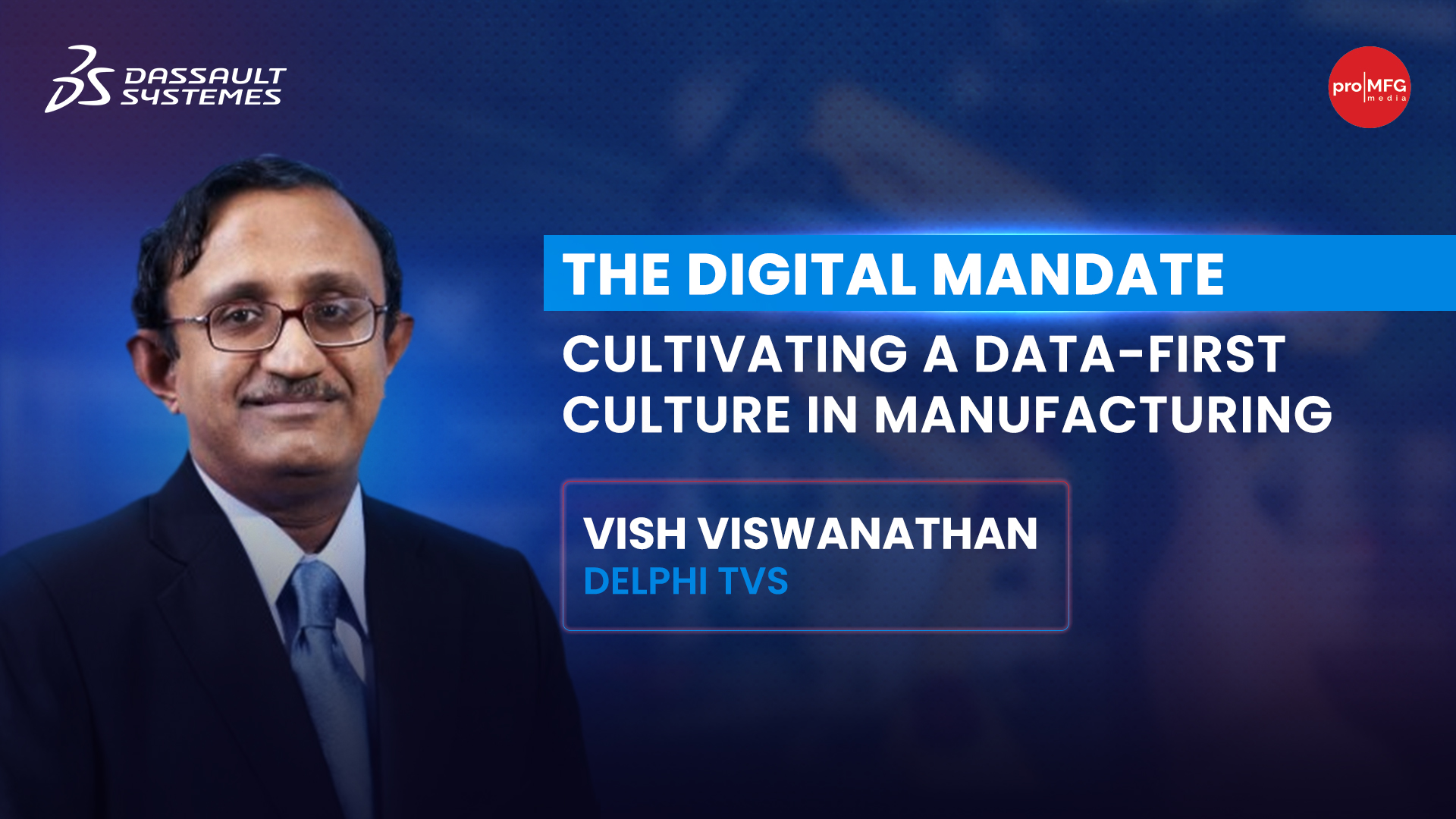
January 2026 : In the high-stakes world of connected manufacturing, the leap toward a "Virtual Twin" or data-led strategy isn’t just about the hardware you install; it’s about the mindset you instill. During a recent roundtable by Dassault Systemes on Competitive Advantage through data and discipline, Vish Viswanathan of Delphi TVS shed light on the often-overlooked human element of the digital revolution. For Viswanathan, the transition to smart manufacturing is less about the "how" of technology and more about the "who" of the workforce.
The transition to data-driven decision-making often hits a wall of institutional habit. Even when sophisticated online systems are in place, the gravitational pull of "the old way" remains strong. Viswanathan noted that simply providing tools isn't enough; leadership must occasionally mandate their use to break old cycles. "When we started generating a lot of data online on manufacturing, what we found was people still wanted to go back to their spreadsheets... and then start presenting data. So we said, No, we will only conduct reviews online. You get into that particular system and then do the reviews that way."
This "enforced adoption" isn't about rigid control, but about creating an environment where change becomes the only path forward. By removing the safety net of manual spreadsheets, Delphi TVS forced a pivot toward real-time, system-based transparency, ensuring that "Digital" wasn't just an add-on, but the core operating reality.
Building a data-driven culture requires a delicate balance of empathy and authority. Viswanathan emphasized that while you eventually have to "enforce it," the journey begins with psychological buy-in. Transitioning a workforce with decades of experience requires addressing the silent fear that new technology might render that experience obsolete.
The challenge, according to Viswanathan, is to "Take the time to sell it to the people, explain to them the benefits of that. Also understand their concerns, their fears, and see how you address that." Culture isn't built by a memo; it’s built by acknowledging that people are "used to a way of doing things" and guiding them toward new skills with patience before hitting the "go" live button.
When asked what single capability technology needs to develop to accelerate manufacturing efficiency, Viswanathan’s answer was disarmingly simple: "I would say make it more user friendly."
If the goal is to bridge the gap between a veteran shop-floor worker and a complex data dashboard, the technology must be intuitive. The friction of difficult interfaces often fuels the desire to return to manual methods. By lowering the barrier to entry through better UX, the manufacturing sector can ensure that "Connected Manufacturing" is a tool for every worker, not just the data scientists.
In the end, the competitive advantage of the Virtual Twin and data discipline isn't found in the code - it’s found the moment a worker chooses the system over the spreadsheet.

NEWSLETTER
TRENDING ON PRO MFG


MORE FROM THE SECTION