Blueprint for the Future: Building Resilient and Connected Automotive Ecosystems
#AutomotiveIndustry #Industry40 #DigitalTransformation #SupplyChainResilience #ConnectedEcosystems #ProMFGMedia #DassaultSystèmes #ACMA #AutomotiveManufacturing #TVSNext
August 2026 : The modern automotive landscape is moving at a breakneck speed, yet one stubborn hurdle continues to trip up even the most seasoned manufacturers: working in silos. At the CXO Leadership Roundtable in Chennai - presented by Dassault Systèmes and Pro MFG Media, with support from ACMA India and Knowledge Partner TVS Next - industry leaders gathered to tackle this head-on. Under the compelling theme, "Connected Automotive Ecosystems: Driving Collaboration, Visibility & Operational Excellence Across the Value Chain," the conversation cut straight through the corporate buzzwords to address the real friction points holding back production lines.
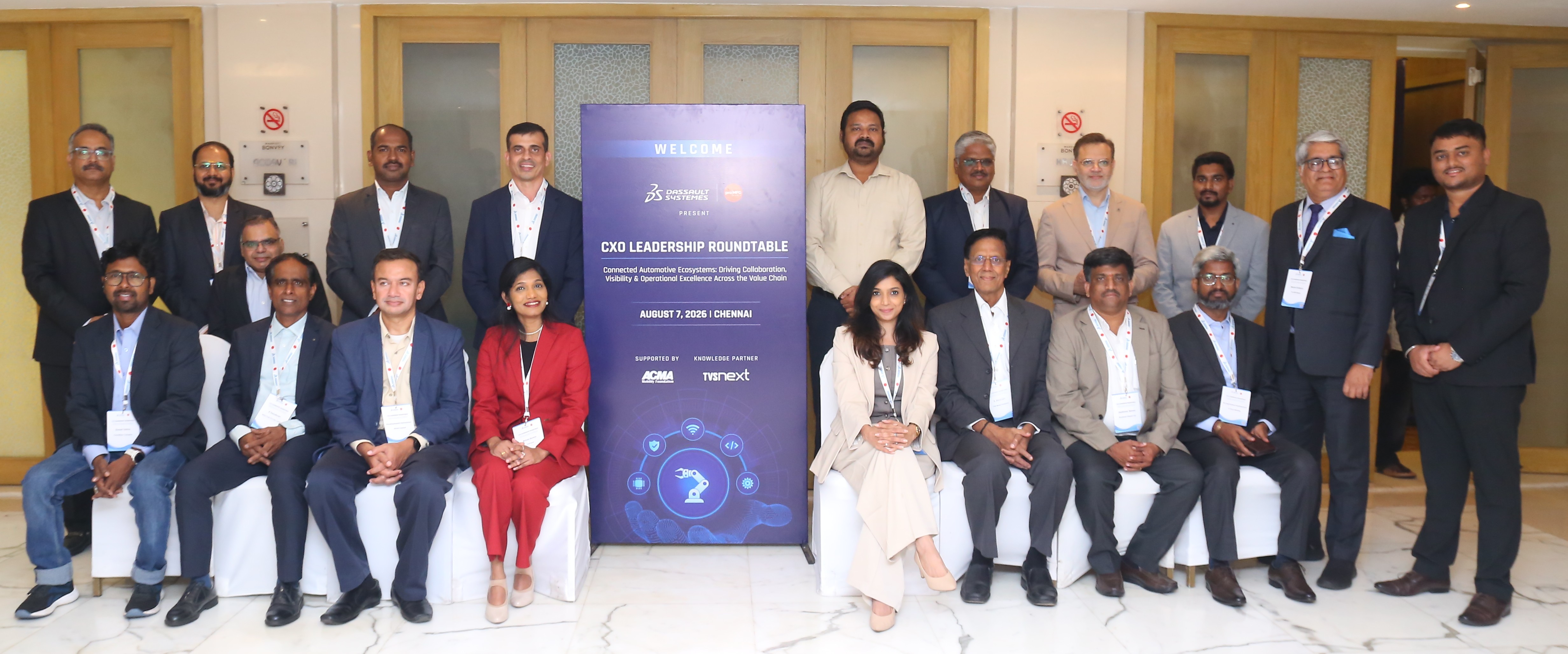
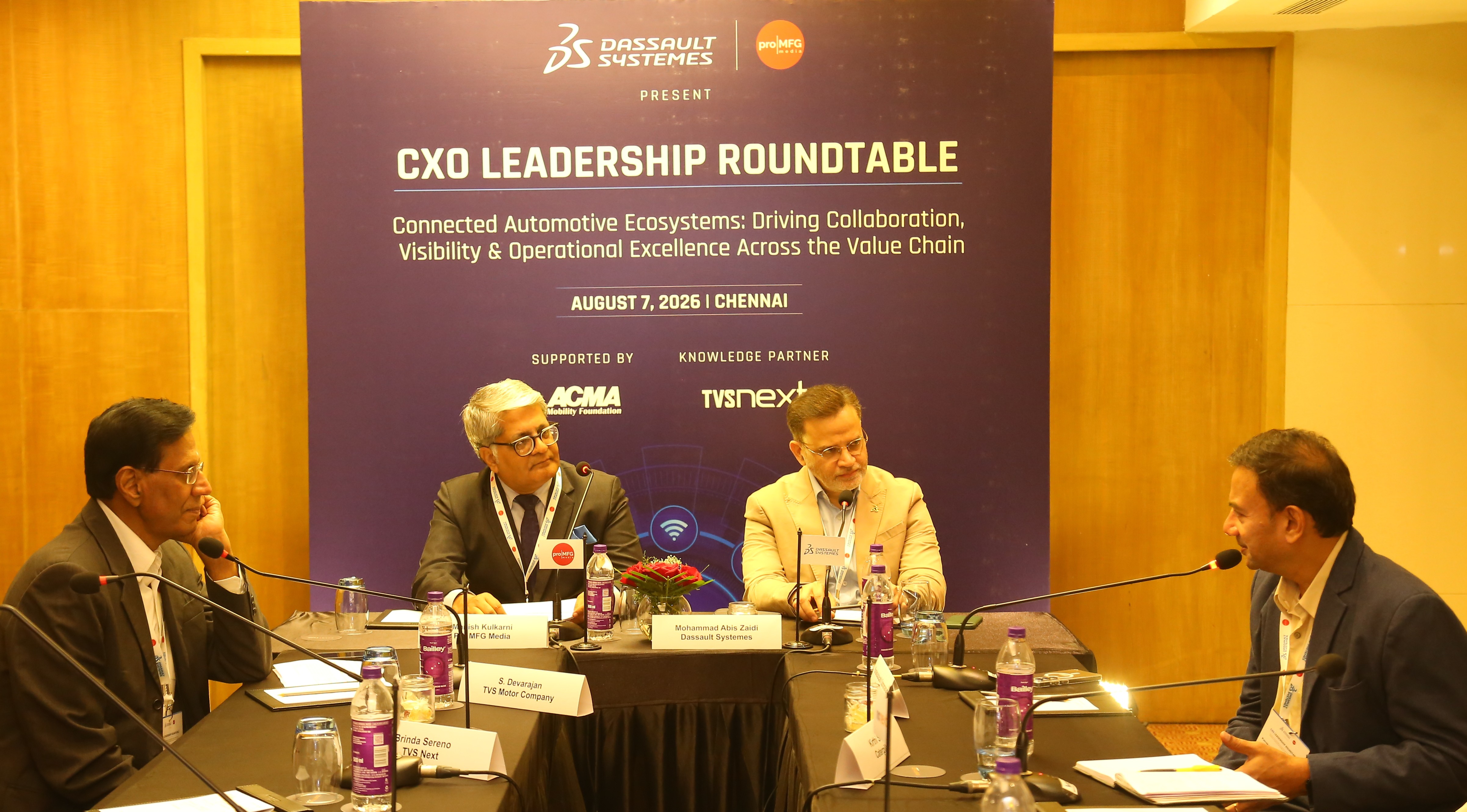
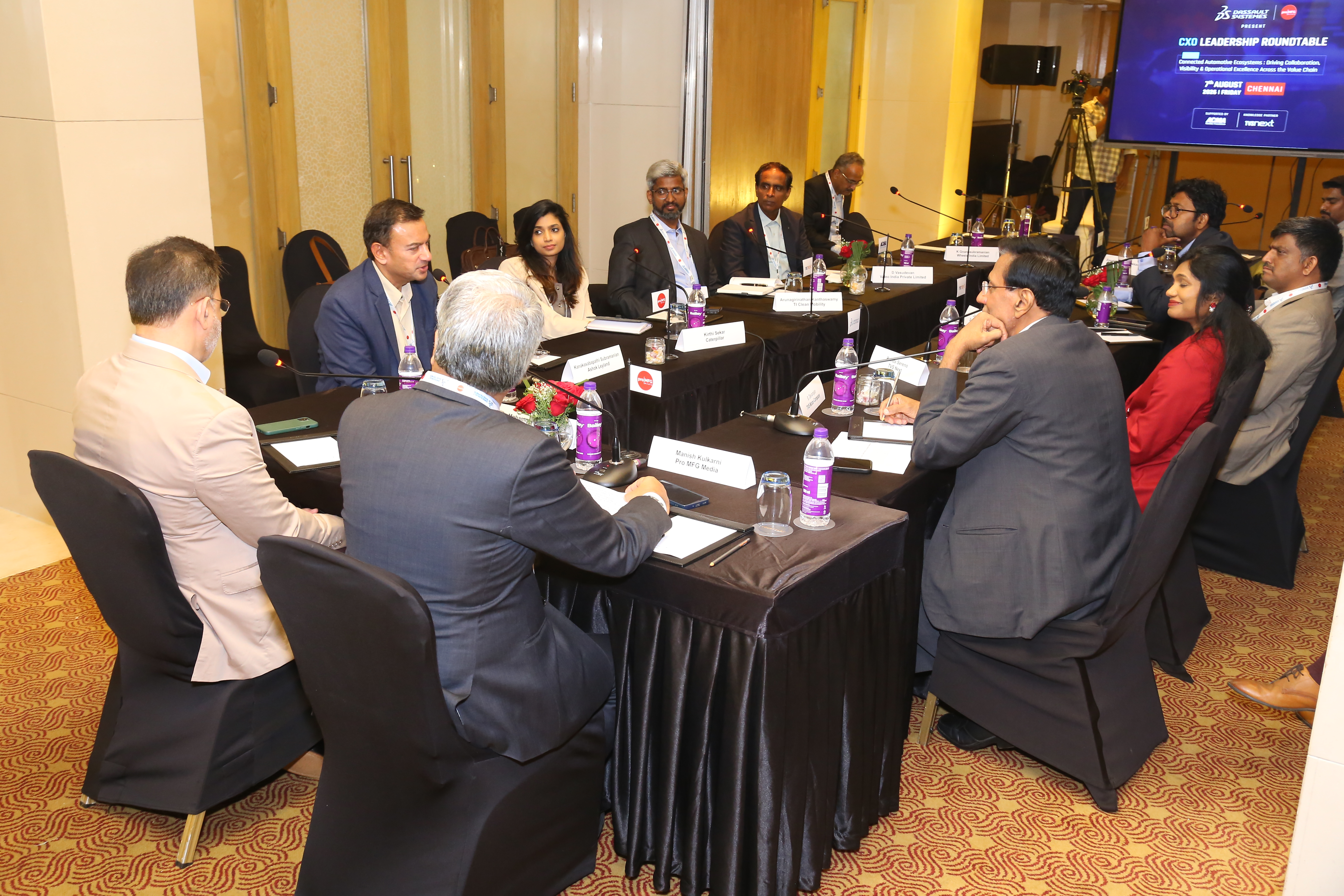
Moderated by Manish Kulkarni (Pro MFG Media), the roundtable convened top executive voices across OEMs, Tier-1 suppliers, and technology leaders: Arunagirinathan Kanthaswamy - TI Clean Mobility, Brinda Sereno - TVS Next, D Vasudevan - Valeo India, and Essakkimuthu Chokkalinagam - FORVIA, Jayakumar Selvam - Sundaram Clayton, Kanakasabapathi Subramanian - Ashok Leyland, Mohammad Abis Zaidi - Dassault Systèmes, S Devarajan - TVS Motor Company, and Suresh Sahoo - Ford.
One of the central themes echoed throughout the session was the persistent issue of organizational and functional silos. Historically, original equipment manufacturers (OEMs) and suppliers operated with distinct handoff points, often creating blind spots and communication lag.
The leaders highlighted that working in silos between OEMs and suppliers remains one of the primary drivers behind missed deadlines and slipping timelines across the value chain. Even internally, design, engineering, and shop-floor production frequently struggle to stay synchronized in real time. Closing this connectivity gap is no longer just an operational goal - it has become a strategic priority for surviving market volatility.
To overcome these latency bottlenecks, the panel discussed how digital continuity is reshaping vehicle design and engineering. Virtual twins and advanced simulation technologies were pinpointed as game-changers.
By creating high-fidelity digital models, engineering teams can validate designs, simulate stress tests, and optimize manufacturing workflows long before physical materials are ever cut. This drastically reduces the dependency on time-consuming physical prototyping, cuts down validation costs, and significantly accelerates time-to-market for new platform launches.
Beyond design and production floor connectivity, the discussion turned toward supply chain agility. Recent global disruptions have made one thing clear: reactive management is a high-risk strategy.
The panelists stressed that real-time, end-to-end visibility across the extended supply network is essential. When suppliers and OEMs share unified data environments, teams can identify bottlenecks early, predict component shortages, and pivot rapidly in response to market disruptions. True operational excellence relies on building transparency and trust across every tier of the ecosystem.
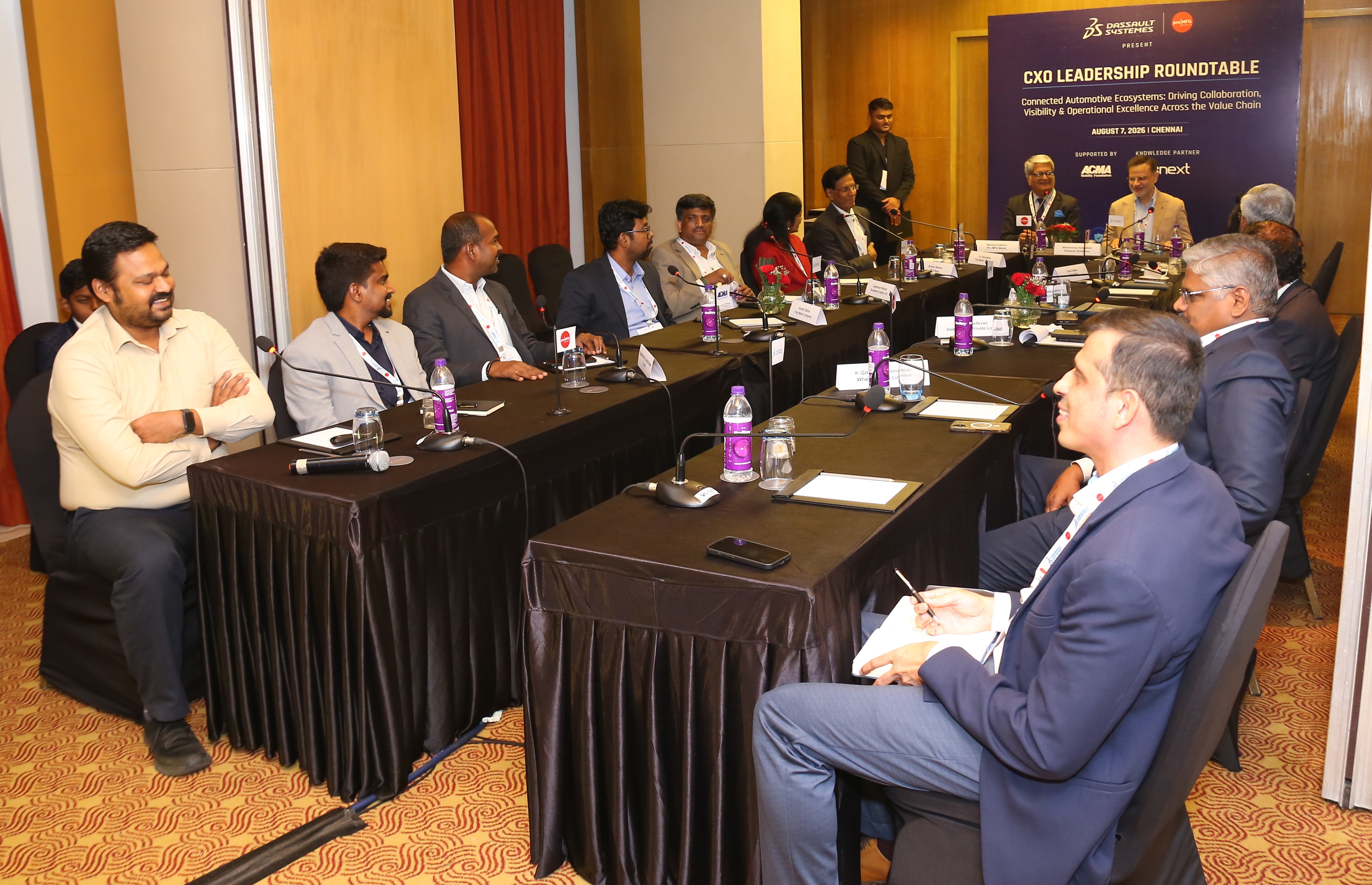
Concluding the insightful session, Pradeepraj Ramadoss and Gopalkrishna Bhat from Dassault Systèmes took the platform to summarize the key takeaways surrounding digital continuity and collaborative growth. They expressed sincere gratitude to all the distinguished speakers and attendees for sharing their valuable perspectives and driving meaningful discourse on the future of automotive ecosystems.
As the roundtable concluded, a shared consensus emerged: technology provides the engine, but collaboration provides the direction. Connected automotive ecosystems are built on shared data platforms, clear digital communication, and a collective commitment to breaking down long-standing industry silos.

NEWSLETTER
TRENDING ON PRO MFG


MORE FROM THE SECTION