From Downtime Fear to Digital Growth: Bridging OT and IT in Modern Manufacturing
#DigitalTransformation #ProMFGMedia #SmartManufacturing #FutureOfMobility #AutomotiveInnovation #SustainableManufacturing #Industry40 #AutomotiveLeadership #EVIndia #ACMAThinkTurf2026"Attrition, technology adoption, and diversity should never be just HR KPIs - they must be business KPIs. The minute you treat digital transformation as a software upgrade instead of a cultural shift, you’ve already lost." - Hari Govind Thilak, CHRO, ZF CVS India
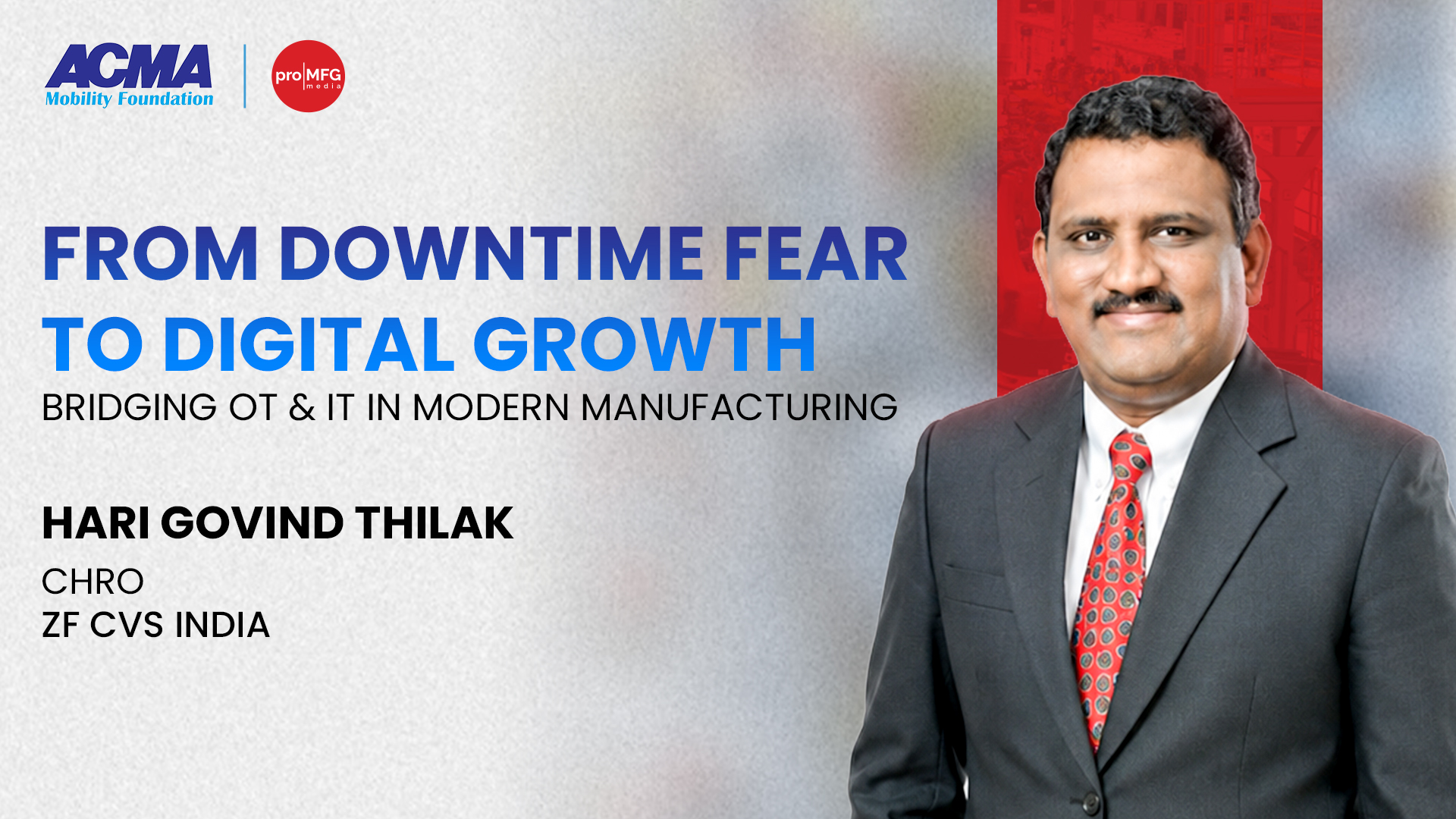
September 2026 : Walk into almost any board room discussing Industry 4.0 and you’ll hear brilliant presentations on AI algorithms, sensor density, edge devices, and digital twins. Yet, when you step onto the shop floor, the single biggest obstacle to smart manufacturing rarely involves code or silicon.
It involves fear, legacy mindsets, and organizational friction.
This sharp contrast between technological promise and human reality took center stage at the 4th Edition of the ACMA Automotive Smart Manufacturing Think Turf 2026, powered by Pro MFG Media. Addressing the summit’s theme, “Transforming Mobility: Innovation, Integration, and Impact,” industry experts dissected the practical realities of plant performance.
During the panel session “From Data to Decisions: Capitalizing on Advanced Technology for Plant Performance,” Hari Govind Thilak, CHRO at ZF CVS India, brought a grounding human perspective to a room full of technology leaders, arguing that seamless OT-IT integration is ultimately a cultural challenge, not a software problem.
Why do legacy systems persist on factory floors even when better tech exists? Because manufacturing operates under a relentless culture of downtime intolerance.
As Thilak highlighted, the moment IT suggests taking a line offline for 24 hours to integrate new protocols, implement cybersecurity measures, or standardize data, production managers panic. This deep fear of short-term disruption creates a massive barrier to long-term scalability.
To overcome this, organizations must move away from isolated tech pilots and address the root causes of resistance:
- • Lack of Standardization: Fragmented systems within a single plant breed confusion.
- • Cybersecurity Anxiety: Fear of exposing legacy OT networks to external IT threats.
- • The "Don't Touch It If It Works" Mindset: A hesitation to trade familiar legacy routines for modern digital tools.
One of the most striking points raised during the discussion was the failure of top-down "change management" pushed exclusively by support functions.
A Shared Responsibility: Building a continuous learning culture cannot be outsourced to HR workshops. When digital transformation, upskilling, or workforce adaptability are treated merely as HR metrics, they fail to gain traction on the shop floor.
Transformational initiatives succeed only when driven by a business-wide shared vision. Rather than relying on a single "transformation champion" to push updates down the hierarchy, modern organizations require distributed ownership. On today's factory floor, every team leader, operator, and engineer must own their piece of the digital transition.
How do you get a diverse workforce - ranging from veteran engineers to floor operators - to embrace rapid digital updates? Look no further than the smartphone.
People didn't take formal training classes to adapt to mobile banking or touch interfaces; they adapted because the technology met them where they were. Industrial software must follow the same principle.
- • Language & Context: In a diverse manufacturing landscape like India's, expecting every line worker to navigate complex English software is unrealistic.
- • Native Usability: Software that translates Standard Operating Procedures (SOPs) into regional languages (like Tamil or Hindi) immediately bridges the skill gap.
When tools feel as intuitive as everyday consumer apps, resistance evaporates, cross-functional collaboration thrives, and the workforce naturally aligns with the company's broader digital vision.
Achieving real ROI from smart manufacturing isn't just about unlocking locked PLCs or building consolidated dashboards. It requires cultivating data trust and workforce agility. When leaders pair advanced OT-IT integration with shared accountability, localized accessibility, and genuine cultural empathy, plant performance soars - leaving legacy friction far behind.

NEWSLETTER
TRENDING ON PRO MFG
MORE FROM THE SECTION