Bridging the Generational Gap: Digital Twins as a Catalyst for Modern Workforce Adoption
#ManufacturingExcellence #DigitalTwin #FutureWorkforce #IndiaTech #AutomotiveInnovation #Industry40 #SmartManufacturing
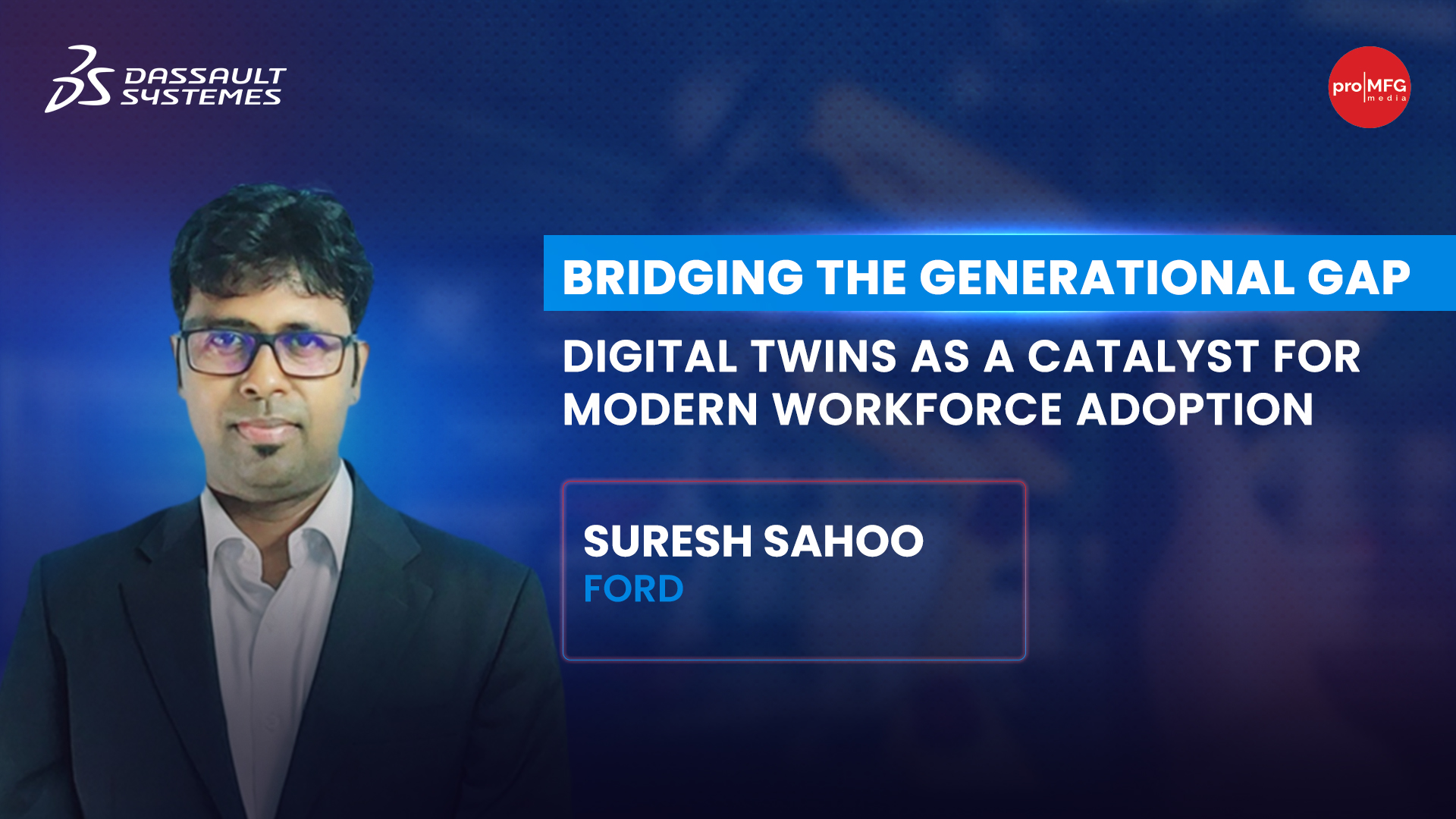
January 2026 : In an era where the automotive shop floor is rapidly evolving into a high-tech ecosystem, the influx of Gen Z and millennial talent is shifting the industry’s DNA. At a recent roundtable hosted by Dassault Systèmes, Suresh Sahoo from Ford explored how the "Virtual Twin" is not just a tool for engineering precision, but a vital bridge for talent integration and accelerated learning in the Asia-Pacific region.
The modern manufacturing workforce arrives with a distinct advantage: they are "digital natives." Unlike previous generations who had to transition from manual drafting and physical trial-and-error, today’s new employees enter the factory with an inherent comfort with complex interfaces. Sahoo notes that for these younger cohorts, technology like digital twins isn’t a hurdle to be cleared, but a language they already speak. "The newer technologies, like virtual technologies and digital twins especially, are helping... when the new employees are coming, I mean, all these are primarily tech-savvy. They learn from the senior designers as well using these tools."
This digital fluency allows for a unique knowledge transfer. While senior engineers provide the deep domain expertise of automotive mechanics, the younger workforce leverages digital design tools to visualize and execute those concepts faster than ever before. This synergy is transforming the traditional mentor-mentee relationship into a collaborative digital exchange.
One of the most significant impacts of the Virtual Twin on the shop floor is the democratization of the prototyping process. Traditionally, developing a new part required physical prototypes, which were costly and time-consuming. For a global player operating across India and the Asia-Pacific, the ability to bypass these physical constraints is a massive competitive advantage. Sahoo emphasizes that digital prototyping allows the new workforce to experiment without the fear of material waste or physical failure.
By running multiple digital iterations, young engineers can test the limits of a design, refine its performance, and iron out assembly issues before a single piece of hardware is manufactured. This "virtual sandbox" environment significantly shrinks the learning curve, allowing fresh talent to contribute to high-stakes projects much earlier in their careers.
In the context of the Indian manufacturing landscape, these technologies are more than just "fancy tools." They are essential for managing the complexity of modern automotive design while maintaining the speed required by global markets. As Sahoo points out, the adoption of digital twins is particularly useful for the local workforce, providing them with a world-class platform to showcase their innovation.
Ultimately, the Virtual Twin acts as a force multiplier. It takes the inherent tech-savviness of Gen Z and millennials and focuses it on the disciplined, data-driven world of manufacturing. The result is an industry that is not only faster and more efficient but one that is perfectly aligned with the skills and expectations of its future leaders.

NEWSLETTER
TRENDING ON PRO MFG



MORE FROM THE SECTION