From Records to Responsibility: Re-engineering the Shop Floor Culture
#ManufacturingExcellence #DigitalTransformation #RealTimeData #OEE #SmartFactory #Industry40 #DataIntegrity #Operationalexcellence #Agility #Resilience
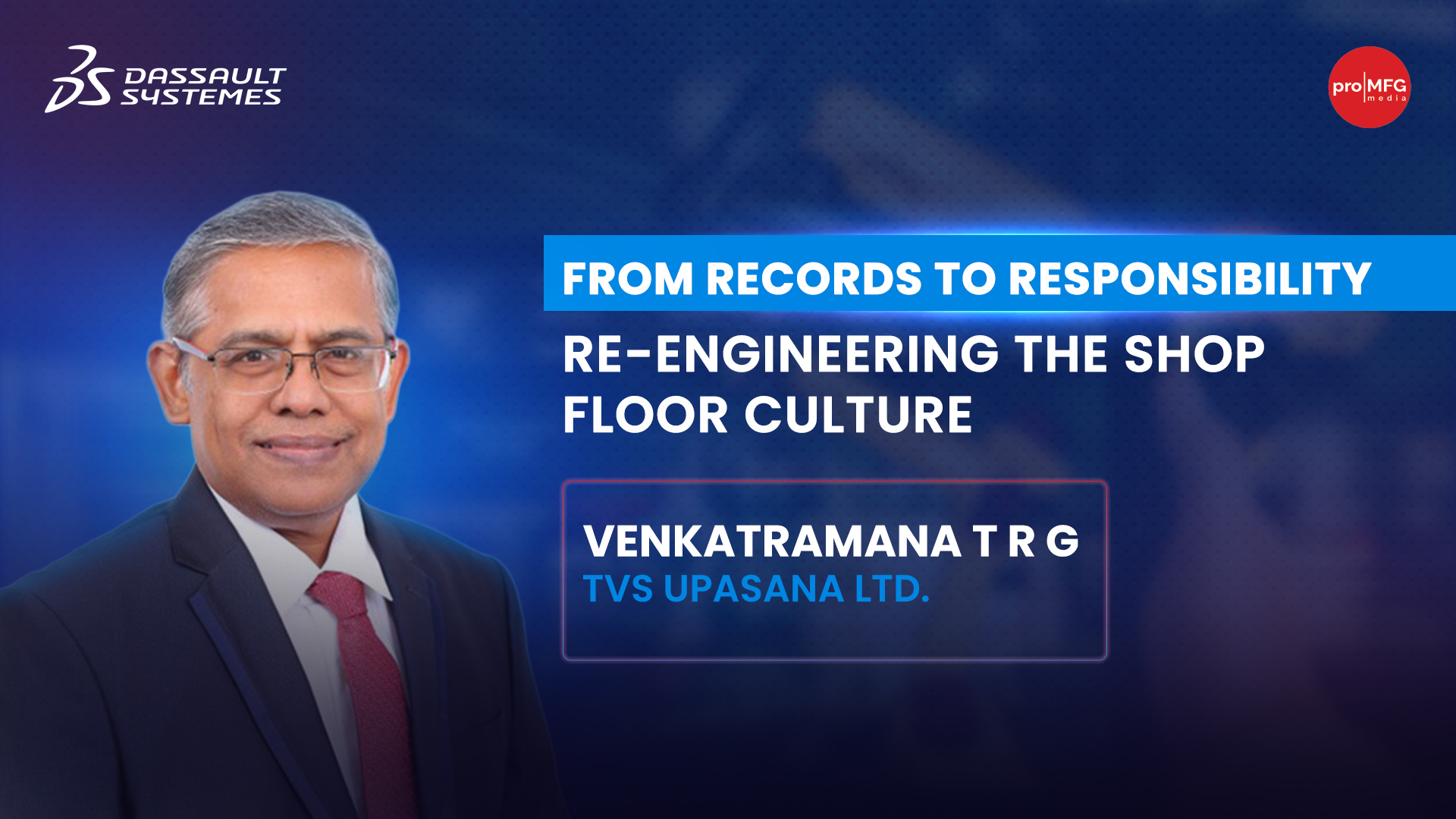
January 2026 : In the traditional shop floor environment, data has long been viewed as a static record - something to be filed away in a cabinet or stored in a spreadsheet for later review. However, as Venkatramana T R G from TVS Upasana Ltd shared during a recent roundtable hosted by Dassault Systèmes, the true power of connected manufacturing lies in transforming that data from a passive history into an active, real-time "seamless loop" that drives immediate action and accountability.
For Venkatramana, the shift toward a data-driven culture began with a simple but firm mandate: daily work management and reviews must run exclusively through digital dashboards. By forcing the transition from verbal explanations to real-time visibility, the organization uncovered a "perceptible change" in how employees perceive their roles.
"We found this perceptible change in the people because they are able to understand why the production loss happened yesterday...We fix the targets on how soon they close the tasks, and who is performing in closing the task also becomes a dashboard. The people started taking more responsibility." By making task closure visible and measurable, the company fostered a sense of ownership. This was further reinforced by digital SOPs that require photographic evidence of data entries. As Venkatramana puts it, when employees must provide evidence, they cannot "fake it" - they must "walk the talk," ensuring the data in the system perfectly matches the physical reality of the shop floor.
One of the most persistent headaches in manufacturing is the discrepancy between what is recorded in an ERP system and what is actually sitting in the warehouse. Manual adjustments and stock corrections become a thing of the past when a seamless data loop is established.
The integration of ERP, Manufacturing Execution Systems (MES), and Quality Management Systems (QMS) ensures that deviations are addressed the moment they occur. Venkatramana highlighted a quality system that triggers immediate emails to stakeholders the moment a process parameter drifts from the standard. "Immediate response to the situation because of this digital transformation... When you have a digital standard, the impact is immediate. The next morning, when you do the revised autonomous check, the data will be already modified. The change implementation is very quick."
Connected manufacturing, at its core, is about agility and resilience. By visualizing losses - whether they are breakdowns or speed losses - employees are naturally encouraged to engage in Kaizen (continuous improvement). When these improvements are recognized and rewarded based on objective data, it fuels a self-sustaining cycle of manufacturing excellence.
In Venkatramana’s view, connected manufacturing is far more than a software implementation; it is a "connection between people, machines, and processes." It allows teams to respond lively to customer demand and supply disruptions, turning what used to be a delayed, paper-based reaction into an immediate, digital-first response. By dissolving the gap between the record and the reality, the factory becomes not just a place of production, but a resilient organism capable of instant adaptation.

NEWSLETTER
TRENDING ON PRO MFG


MORE FROM THE SECTION