Building Agile Shop Floors in an Era of Supply Chain Volatility
#DigitalTransformation #ProMFGMedia #SmartManufacturing #FutureOfMobility #AutomotiveInnovation #SustainableManufacturing #Industry40 #AutomotiveLeadership #EVIndia #ACMAThinkTurf2026"If digitization or intelligent manufacturing isn’t bringing clear business value, it’s only a gizmo - and gizmos are unsustainable." - Murali Vaidyanathan, President - Automotive, Wheels India

September 2026 : Walk into any forward-looking automotive plant today, and you’ll see sensor arrays, predictive dashboards, and robotic cells hard at work. But peel back the technological sparkle, and a candid question emerges for executive leadership: Is all this digital machinery actually making the business more agile, or is it just expensive window dressing?
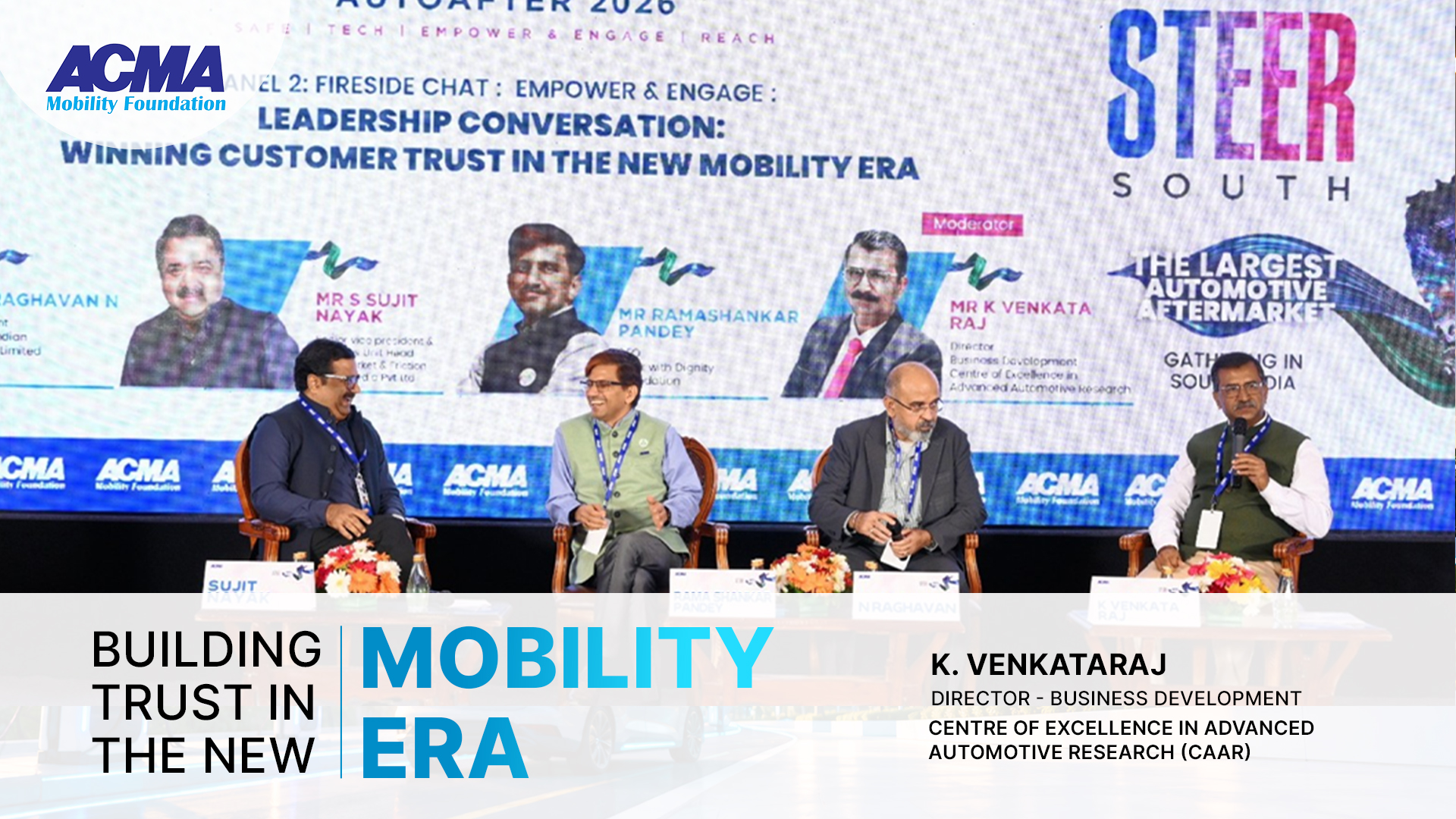
At the 4th Edition of the ACMA Automotive Smart Manufacturing Think Turf 2026 powered by Pro MFG Media, industry leaders met under the banner of Transforming Mobility: Innovation, Integration, and Impact.
During the high-powered panel on "Gears of Automotive Growth: Resilient, Automated & Intelligent Manufacturing," Murali Vaidyanathan, President - Automotive at Wheels India, unpacks what it takes to scale smart manufacturing past pilot purgatory into measurable bottom-line value.
Here are the key insights from their conversation on building shop floors that are sharp, culturally mature, and globally competitive.
1. Proactiveness Beats "Gizmos" Every Time
For many, "intelligent manufacturing" conjures images of complex AI algorithms and end-to-end automation. But from the corner office, the definition is far simpler: Does it make the organization more proactive and agile?
Vaidyanathan points out that real value lies in knowing about a machine failure before it halts production, or catching a defect before it ever leaves the station. It’s about recalibrating schedules in real time when global supply lines shift unexpectedly.
"You can afford to pilot a tool at a single location just to see how it works," Vaidyanathan noted. "But scaling company-wide comes with real capital costs. Without a clear Return on Investment (ROI), digital tech stays a novelty instead of a transformation."
2. Unlocking Innovation: Culture, Hoppers, and a 30% Failure Budget
Breaking down operational silos across R&D, engineering, and supply chain is notoriously tough. Vaidyanathan highlighted that organizational dysfunction often boils down to an inability to collaborate cross-functionally.
To overcome this, companies must treat innovation like safety or quality - as an all-hands, company-wide process:
- • Build an Open Hopper: Capture ideas systematically from every department, whether it’s a product tweak, a process fix, or a workflow shift.
- • Shepherd with Cross-Functional Teams: Senior leaders across departments should run ideas through a straightforward gate system for evaluation and approval.
- • Normalize Failure: Create psychologically safe guardrails.
"If you put 20 ideas into the pipeline, 30% of them will fail - and management has to be okay with that," Vaidyanathan emphasized. "Without healthy risk-taking, innovation simply stalls out."
3. The Localization Challenge: Moving Beyond Cheap Labor
Localization is no longer just a trend; with fluctuating exchange rates and long lead times, it’s an economic imperative. While India’s component supply base is vastly stronger in capability and scale today than it was two decades ago, a new dilemma has emerged: Sometimes local components cost more than landed imports.
Why? The productivity gap.
Competitive Edge = Low Labor Cost + High Productivity
While India boasts lower labor costs, its overall manufacturing productivity often lags behind nations like South Korea or China. Labor cost arbitrage alone isn't enough to win. To make localization work sustainably without sacrificing quality, Indian plants must aggressively raise productivity levels per square foot and per worker.
As Indian manufacturing steps up to power the global automotive ecosystem, the roadmap is clear: cultivate cross-functional trust, budget for sensible risks, focus relentlessly on labor productivity, and ensure every digital tool earns its place on the shop floor.

NEWSLETTER
TRENDING ON PRO MFG



MORE FROM THE SECTION